

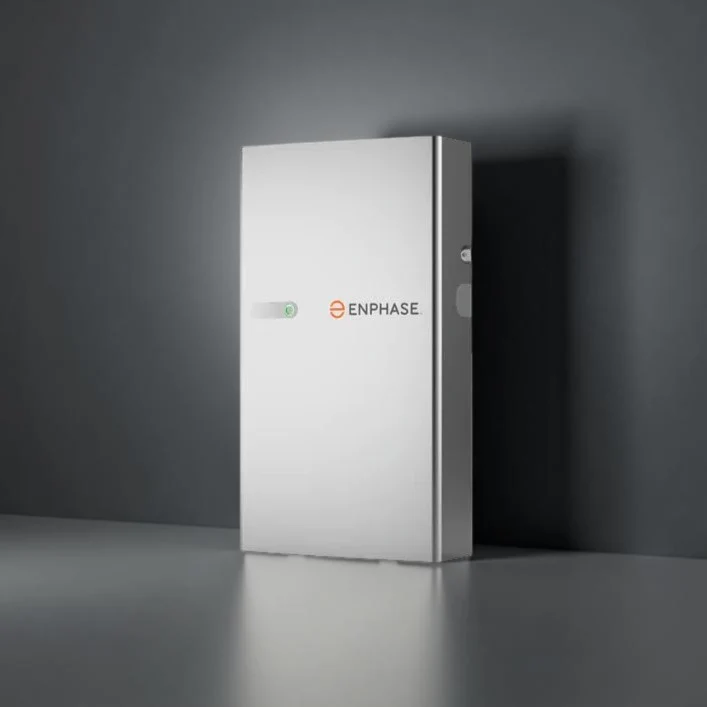

Enphase Battery Review: The IQ 5P, Honestly Rated
Some of the best-built, best-warrantied storage you can buy — modular, ultra-safe, and a retrofit star. The honest verdict on the IQ Battery 5P and 10C, and the premium-price catch.
The short answer
The Enphase IQ Battery is premium storage that earns its reputation — with one honest catch. The flagship IQ Battery 5P uses safe LFP chemistry, hits ~96% efficiency, and carries an industry-leading 15-year (6,000-cycle) warranty. Its defining trait is being fully AC-coupled and modular: stack 5kWh blocks up to ~60kWh, retrofit it to existing solar (even non-Enphase), and enjoy panel-level monitoring with no single inverter to fail. It’s brilliant in an Enphase microinverter home.
The catch is price: it’s the most expensive battery per kWh in its class — you pay a premium for the modularity, warranty and ecosystem. And it’s at its best within the Enphase ecosystem; AC-couple it to a non-Enphase inverter and you lose the single-app seamlessness. So it’s superb for existing Enphase owners and retrofit/complex-roof homes that value safety, warranty and monitoring — less ideal if you just want the most storage for the least money, where a Tesla Powerwall or GivEnergy is cheaper. We score it 4.2/5. Full review below.
What this review covers
Enphase is best known for inventing the microinverter — a small inverter on every panel instead of one central box — and its IQ Battery is the natural extension of that philosophy into storage. It’s one of the most-searched and most-recommended battery brands in Britain, so this review gives the honest account: what makes it special, where it genuinely leads, the price reality, and who should (and shouldn’t) buy one.
The brand and the range
Enphase is a premium American energy-technology company that pioneered the microinverter, and its batteries share that same distributed, modular DNA. The current UK range centres on the IQ Battery 5P — the third-generation flagship: 5kWh usable per module, LFP chemistry, ~96% round-trip efficiency, 3.84kW continuous (7.68kW peak) power, and a 15-year/6,000-cycle warranty. Above it sits the newer IQ Battery 10C (10kWh per unit, higher continuous power, and better cost-per-kWh than the 5P), with older second-generation 3T and 10T units still around on 10-year warranties. Every current Enphase battery uses lithium iron phosphate (LFP) — the safest mainstream battery chemistry, thermally stable with no meaningful risk of thermal runaway — which is a genuine reassurance for a product living in your home. The 5P is the one most people mean when they search “Enphase battery,” and it’s the focus here, with the 10C the pick when you need more capacity per unit.
What’s genuinely good
The warranty. A 15-year, 6,000-cycle warranty is among the best in the entire home-battery market, and it signals real manufacturer confidence — it also comfortably matches the kind of 10–15 year lifespan you want from storage. The safety. LFP chemistry is the safest widely-used battery type, a meaningful plus for something mounted in a garage or utility room. The modularity. Building storage from 5kWh blocks means you buy exactly what you need and can expand later — flexibility a single big battery can’t match. The AC-coupled resilience. Each battery has its own built-in microinverters, so there’s no single central inverter to fail — one fault doesn’t take the whole system down, echoing the reliability logic of Enphase’s panel microinverters. The monitoring. The Enphase app gives panel-level and battery-level visibility, genuinely useful for understanding and optimising your system. And the retrofit flexibility (below) is best-in-class. This is seriously well-engineered kit.
Real UK pricing — and the honest catch
The best warranty in the class, but the highest price per kWh
Here’s the honest heart of the review. Enphase doesn’t publish a public UK price list — pricing is set through certified installers — so treat figures as indicative until you have a quote, but expect roughly £4,000–£5,000+ per 5kWh IQ Battery 5P unit installed, scaling with the number of modules you stack. The catch is comparative: the IQ Battery 5P is the most expensive option per kWh in its class. You’re paying a premium for four specific things — modularity, the safety-focused LFP chemistry, the 15-year warranty, and the Enphase ecosystem — and if those are what you value, the premium is justified. If they’re not, it’s money spent on features you won’t use. For context, a Tesla Powerwall gives more capacity in a single unit at a lower cost per kWh, UK-focused GivEnergy is cheaper still, and even Enphase’s own newer 10C improves cost-per-kWh over the 5P for larger needs. So the 5P is emphatically not the battery for buyers chasing the lowest cost per kilowatt-hour — it’s the battery for those who want the best warranty, safety and flexibility, and will pay for them. Being clear with yourself about which camp you’re in is the whole decision.
The retrofit and ecosystem story
This is where Enphase genuinely shines. Because the IQ Battery is fully AC-coupled — it has its own built-in microinverters and connects to your home’s AC circuit — it retrofits beautifully to existing solar without replacing your current inverter, works with string-inverter systems from other brands, and can even run battery-only with no solar for pure backup. If you already own Enphase microinverters, adding an IQ Battery is close to a no-brainer: it drops into the same app and ecosystem with seamless single-pane monitoring and control, and it’s unambiguously the best battery for an Enphase microinverter home. The honest caveat comes with non-Enphase systems: the battery still works fine via AC-coupling, but you lose the single-app seamlessness, ending up with two apps and two support channels — the battery in Enphase’s world and your existing inverter in its own. That’s not a dealbreaker, but it’s a real consideration, and it’s why the value equation tips most strongly in Enphase’s favour when the whole system is Enphase. For mixed systems, weigh whether the premium still makes sense versus a battery matched to your existing inverter brand.
Enphase vs Tesla Powerwall vs GivEnergy
The three most-compared batteries, honestly separated. Enphase IQ Battery wins on warranty (15 years vs Tesla’s ~10), modularity (5kWh blocks, not one big commitment), LFP safety, and seamless integration with Enphase microinverters — the pick for existing Enphase homes, complex or shaded roofs, and warranty-and-flexibility-focused owners. Tesla Powerwall 3 wins on value: more capacity in one unit at a markedly lower cost per kWh, and easier whole-home backup from a single bigger battery — the choice for maximum storage per pound and simple backup. GivEnergy, a strong UK brand, is typically the value pick for British homes — good storage at keener prices with solid UK support. The rule: best warranty, modularity and Enphase integration → Enphase; best raw value and simplest backup → Tesla Powerwall; keenest UK-focused price → GivEnergy. All three use safe modern chemistry and are genuinely good — you’re choosing between premium flexibility, best-value capacity, and UK value, not good versus bad. Our battery hub compares the wider field.
Backup and power cuts
Enphase batteries can provide power-cut backup, with a nuance about scale and a clever bonus. Each 5P delivers 3.84kW continuous — enough for essential circuits (lights, fridge, router, some sockets) but not necessarily a whole home running everything at once, so whole-home backup typically needs multiple units and/or load management your installer designs. The Enphase-specific bonus: with IQ8 microinverters, the “Sunlight Backup” feature keeps your solar generating during a daytime power cut even without a battery — a resilience trick unique to Enphase’s grid-forming microinverters. Combined, an Enphase system can be very capable in an outage: the battery covers essentials round the clock while the solar tops it up in daylight even with the grid down. Just be explicit with your installer about how much of the home you want backed up, since that sets the number of units — and be realistic that comprehensive whole-home backup costs more than covering essentials, with any brand.
Our score: 4.2 / 5
Enphase IQ Battery — premium, safe, superbly warrantied
The bottom line: The Enphase IQ Battery is premium, safe, modular storage with a class-leading 15-year warranty and superb retrofit and monitoring credentials — outstanding in an Enphase microinverter home. It loses points only on value: it’s the priciest per kWh in its class, so cost-focused buyers will find a Tesla Powerwall or GivEnergy cheaper. Buy it for the warranty, safety, modularity and ecosystem; skip it if lowest cost per kWh is your priority.
Get my free quotes →Enphase IQ Battery: pros & cons
✓ Pros
- Class-leading 15-year / 6,000-cycle warranty
- Safe LFP chemistry (no thermal runaway)
- Modular — stack 5kWh blocks up to ~60kWh
- Superb AC-coupled retrofit flexibility
- No single inverter to fail — resilient
- Seamless in an Enphase microinverter system
✗ Cons
- Most expensive per kWh in its class
- Best value only within the Enphase ecosystem
- Non-Enphase pairing means two apps/support channels
- Lower per-unit power — whole-home backup needs several
- No public UK price list (installer-set)
- Overkill if you just want cheap capacity
Frequently asked questions
Are Enphase batteries any good?
Yes — among the best-built and best-warrantied. The IQ Battery 5P has safe LFP chemistry, ~96% efficiency and a class-leading 15-year warranty, and its modular AC-coupled design is superb for retrofits and Enphase homes. The honest catches: it’s the priciest per kWh in its class, and best within the Enphase ecosystem. We score it 4.2/5.
How much does one cost in the UK?
Enphase doesn’t publish UK prices (installer-set), but expect roughly £4,000–£5,000+ per 5kWh 5P unit installed, scaling with modules. It’s the most expensive per kWh in its class — you pay for modularity, warranty and ecosystem. Tesla Powerwall and GivEnergy are cheaper per kWh.
Can I add one to my existing solar?
Yes — its AC-coupled design retrofits well to existing solar (even non-Enphase) or runs battery-only for backup. On an Enphase microinverter system it’s seamless; on a non-Enphase system you lose single-app control (two apps/support channels). See our retrofit guide.
Enphase, Tesla or GivEnergy?
Enphase for warranty (15yr), modularity and Enphase integration; Tesla Powerwall for best value and simple whole-home backup; GivEnergy for keenest UK price. All safe, all good — you’re choosing premium flexibility vs best-value capacity vs UK value.
Does it give power-cut backup?
Yes, but each 5P (3.84kW) covers essential circuits, not a whole home at once — whole-home backup needs multiple units. Bonus: with IQ8 microinverters, “Sunlight Backup” keeps solar running in a daytime outage even without a battery. Tell your installer how much you want backed up.
Why is my Enphase battery flashing?
Status lights are mostly normal: steady/slow blue = normal operation/comms; flashing patterns = states like connecting or updating; red = a fault needing attention. For red lights, error messages or “DC switch off” issues, check the Enphase app and contact your installer — don’t interfere with the hardware yourself.
The verdict
The Enphase IQ Battery is a genuinely excellent piece of engineering that knows exactly what it is: the premium, safety-first, modular, superbly-warrantied option for people who value those things and will pay for them. Its 15-year warranty is among the best going, its LFP chemistry is reassuringly safe, its AC-coupled modularity makes it one of the finest retrofit batteries on the market, and in an Enphase microinverter home it’s close to unbeatable for integration and monitoring. For existing Enphase owners especially, it’s an easy recommendation.
The single honest reservation is value: it’s the most expensive battery per kWh in its class, so if your priority is simply the most storage for the least money, a Tesla Powerwall or a UK brand like GivEnergy will serve you better — and there’s no shame in that being your priority. The decision comes down to knowing which kind of buyer you are: pay the premium for warranty, safety, modularity and ecosystem, or spend less per kilowatt-hour elsewhere. A couple of free, no-obligation quotes from MCS-certified installers — ideally including one Enphase-certified fitter if you’re leaning that way — will show you the real numbers for your home and let you weigh the premium honestly against the alternatives.
Important
Going Solar UK is an introduction service, not an installer or retailer. This review reflects publicly available specifications and typical pricing for Enphase IQ batteries as of August 2026: Enphase does not publish a public UK consumer price list, and models, specifications, warranty terms and pricing change – always confirm current details with Enphase or an MCS-certified installer before purchase. Scores are our honest editorial opinion. Going Solar UK has no commercial relationship with Enphase. Never attempt to install, open or troubleshoot battery hardware yourself; it must be handled by qualified professionals.
We may receive a commission when we introduce you to an installer, at no cost to you. Any contract for work is directly between you and the installer.