


10kW Solar System: Cost, Output & Is It Right for You?
A 10kW system is serious kit — the biggest install most homes will ever consider. Here’s what it costs in 2026, the roof and grid hurdles nobody mentions, and who genuinely needs one.
The short answer
A 10kW solar system costs £10,000–£15,000 fully installed in 2026 — around £12,000 is typical — and generates roughly 8,500kWh a year from 22–24 panels needing 44–50m² of roof. Per kilowatt, it’s meaningfully cheaper than smaller systems: roughly £1,000–£1,200/kW versus £1,500/kW for a 4kW install.
The two hurdles that filter out most homes: roof space (few single roof faces hold 24 panels — expect split arrays or ground mounting) and grid approval (10kW needs full G99 permission before installation, and single-phase homes may face export limits). Clear both, match it to high usage — an EV or two, a heat pump, 6,000kWh+ consumption — and it’s the best value per pound in home solar, saving £1,400–£2,000 a year.
What this guide covers
Somewhere between “should we get solar?” and the third quote, plenty of households have the same thought: if we’re doing this, why not do it properly? A 10kW system is that thought taken seriously — over double the size of the standard UK install, enough generation to run a genuinely electrified home, and better value per kilowatt than anything smaller.
But 10kW is also where solar stops being plug-and-play. The roof maths gets tight, the grid paperwork gets real, and the savings maths changes shape. This guide covers all of it honestly — including the cases where the right answer is a smaller system and a better battery. (If you’re earlier in the journey, our 4kW guide covers the standard install this one keeps comparing against.)
How much does a 10kW solar system cost in 2026?
| 10kW setup | Typical installed price (2026) | What you’re getting |
|---|---|---|
| Budget system | £10,000–£11,500 | Value panels, straightforward dual-array roof |
| Mid-range system | £11,500–£13,500 | Quality panels, hybrid inverter(s), better warranties |
| Premium / complex | £13,500–£15,000+ | Top-tier panels, optimisers, slate or multi-face roofs |
| 10kW + 10–15kWh battery | £16,000–£20,000 | The full high-usage-home package |
The per-kilowatt economics are the headline: scaffolding, the electrician’s day, the G99 admin and the installer’s margin don’t double when the panel count does, so big systems buy generation at two-thirds the unit price of small ones. 0% VAT (until March 2027) is included in the figures above. What pushes quotes toward the top end is roof complexity — and at this size, complexity is common, because of what comes next. Panel choice moves the price too: 24 panels amplify any per-panel premium, so our best solar panels guide is worth reading before you pay top brand money across a whole large array.
22–24 panels: the roof-space problem
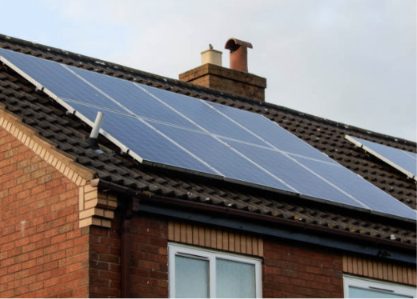
At today’s 435–450W panel ratings, 10kW means 22–24 panels and roughly 44–50m² of usable roof — allowing the standard ~2m² per panel. For context, a typical 3-bed semi’s main roof face holds 10–14 panels. That’s the quiet reason most 10kW quotes involve creative geometry:
- East-west split arrays — filling both roof faces. You lose a little peak output versus due south but spread generation across the day, which actually suits high self-consumption homes.
- Multi-building layouts — house roof plus garage, extension or outbuilding.
- Ground-mounted arrays — the land-rich option, common on rural plots and smallholdings.
- Higher-wattage panels — premium 470W+ panels trim the count to ~21–22 where space is marginal.
Before collecting quotes, spend ten minutes with our panel sizes and dimensions guide measuring what your roof genuinely holds once chimneys, vents and edge margins are subtracted — it’s the single best filter for whether this page or the 4kW one is your reality.
G99 approval and export limits: the part nobody mentions
Why 10kW installs wait for permission
Smaller systems (up to a 3.68kW inverter) use G98 “connect and notify” rules — fit first, tell the network operator after. A 10kW system is far past that threshold, so your installer must submit a full G99 application to your DNO and receive approval before installation. Allow 4–8 weeks, sometimes more in congested areas, and a possible fee. It’s paperwork your installer handles — but it’s why big-system timelines run longer, and why a quote promising “install next week” on 10kW deserves suspicion.
The related issue is your supply itself. Most UK homes are single-phase, and DNOs often cap how much a single-phase property may export — commonly around 3.68–5kW. Your 10kW array can still generate at full tilt for your own use; the cap only limits what flows out to the grid, with the inverter throttling the excess. Three responses, in rising order of cost: accept modest clipping losses on the sunniest days; add a battery to absorb what you can’t export (usually the right answer — see below); or upgrade to a three-phase supply, worth £2,000–£4,000 of disruption only for the most electrified homes. Which inverter architecture handles all this best — one big unit, two smaller ones, or panel-level kit — is exactly the design conversation from our inverters guide, and it’s a genuine test of installer quality: good ones raise export limits unprompted.
What does a 10kW system actually generate?
| Scenario | Annual output | Daily average |
|---|---|---|
| South-facing, southern England | ~9,000–9,500kWh | ~25kWh |
| Average UK roof | ~8,500kWh | ~23kWh |
| East-west split or northern UK | ~7,200–8,000kWh | ~20kWh |
The shape matters as much as the total: a bright June day can deliver 40–50kWh — enough to run the house, fill a 10kWh battery and charge an EV — while a grey December day manages 6–8kWh. Around 70% of annual generation lands between April and September. That summer torrent is why the export-limit question above and the battery question below aren’t afterthoughts on a system this size; they decide where all that surplus energy actually goes. One happy consequence: a 10kW roof makes solar EV charging genuinely practical — surplus alone can put meaningful weekly miles into a car via a diverter-equipped charger like the Sync EV.
Savings and payback: the honest maths
Here’s where 10kW differs structurally from smaller systems. A 4kW system generates roughly what a home uses, so most value comes from displacing 26–27p grid electricity. A 10kW system generates far more than most homes can use in real time — so a much bigger slice of its value rides on what you’re paid for export:
- Self-consumption: a high-usage home absorbing 3,500–4,500kWh directly saves roughly £900–£1,200 a year at current rates.
- Export income: the remaining 4,000–5,000kWh at typical SEG rates of 12–15p earns £500–£750 — and materially more on the best export tariffs, which is why tariff shopping matters twice as much at this scale.
Call it £1,400–£2,000 a year all-in, for payback around 6–9 years — comparable to smaller systems in years, but building far more total value across the panels’ 25+ year life. The swing factors are your export rate, your self-use share (batteries and EVs push it up), and any export cap eating your sunniest hours. If your install qualifies for support, our grants guide covers what’s real in 2026; for most 10kW buyers the 0% VAT already in the price is the main help.
Battery pairing: why big systems and big batteries belong together
On a 4kW system a battery is a nice-to-have. On 10kW it’s close to structural: it soaks up generation an export cap would otherwise clip, shifts your enormous summer surplus into the evening, and — on a smart tariff — turns the whole setup into an earning machine, charging cheap overnight in winter and exporting at peak rates in summer. Our usual honesty still applies (a battery rarely pays for itself on hardware alone), but a 10kW array is the setting where the tariff-plus-battery maths works hardest.
Sizing: 10–15kWh suits most 10kW homes — big enough to matter, small enough to cycle daily. A 10kWh battery adds roughly £4,500–£7,000 installed; modular ranges that stack (like the Fox ESS EP series, which parallels past 40kWh) let you start at 10kWh and grow if an EV or heat pump arrives. Beware quotes pushing 20–30kWh at the outset: capacity that doesn’t cycle is capital doing nothing.
Who a 10kW system actually suits
10kW earns its keep if: your usage is 6,000kWh+ (large family home, home offices, hot tub territory), you run — or plan — one or two EVs or a heat pump, you have the roof geometry or land for 22–24 panels, and you’ll pair it with a battery and a smart export tariff. It’s also the natural size for smallholdings and home-based businesses, where daytime loads swallow generation as it happens.
Size down if: usage is under ~5,000kWh with no electrification plans (a 4–6kW system pays back faster per pound), your roof honestly holds 12–16 panels (a forced split across awkward faces erodes the value), or your DNO confirms a hard export cap you won’t offset with storage. There’s no prize for the biggest array — the prize is the best-matched one, which is exactly what comparing two or three proper survey-based quotes establishes.
10kW solar system: pros & cons
✓ Pros
- Best £-per-kW value in home solar (~£1,000–£1,200/kW)
- ~8,500kWh/year — true whole-home + EV generation
- £1,400–£2,000 annual savings at 2026 rates
- Powers electrified living: EVs, heat pumps, big batteries
- Serious summer surplus = real export income
- 0% VAT until March 2027 on the whole package
✗ Cons
- Needs 44–50m² of roof — beyond most single faces
- G99 approval before install: 4–8 week lead time
- Single-phase export caps can clip sunny-day output
- £10k–£15k up front (£16k–£20k with battery)
- Payback leans on export rates you don’t control
Frequently asked questions
How much does a 10kW solar system cost in the UK?
£10,000–£15,000 fully installed in 2026, with ~£12,000 typical — including panels, inverter, scaffolding, labour, the G99 application and 0% VAT. With 10–15kWh of battery storage, budget £16,000–£20,000 all-in.
How many panels is 10kW, and will they fit?
22–24 modern panels needing roughly 44–50m² of usable roof. Most homes get there with east-west split arrays, garage/outbuilding roofs or ground mounting — our panel sizes guide shows how to measure what your roof genuinely holds.
How much electricity does it generate?
Around 8,500kWh a year on an average UK roof — 23kWh a day on average, from 40–50kWh on peak summer days to 6–8kWh in midwinter. South-facing arrays in southern England reach 9,000–9,500kWh.
Do I need permission for a 10kW system?
Yes — full G99 approval from your network operator before installation (your installer applies; allow 4–8 weeks). Single-phase homes may also get an export limit, which batteries largely neutralise. It’s the key process difference from a 4kW system’s notify-after G98 route.
What does it save per year?
Typically £1,400–£2,000 — roughly £900–£1,200 from using your own generation plus £500–£750+ in export income. Because export is a bigger share than on small systems, your SEG rate and battery strategy move the number more than the panels do. Payback lands around 6–9 years.
Is 10kW too big for my house?
If you use under ~5,000kWh with no EV or heat pump plans, probably — a 4–6kW system pays back faster per pound. 10kW suits 6,000kWh+ households, EV and heat-pump homes, and smallholdings or home businesses with daytime loads.
Best value per kW — for the right home
The bottom line: For high-usage, electrified households with the roof for it, 10kW is the best-value solar money can buy — cheaper per kilowatt, transformative with a battery. The G99 wait and roof maths are the price of admission; a good installer makes both routine.
See my price →The verdict
A 10kW system is the point where solar stops trimming your bill and starts running your life — the house, the car, the battery, with income left over. At £1,000–£1,200 per kilowatt it’s the cheapest generation on the market, and paired with 10–15kWh of storage and a sharp export tariff it’s the strongest financial case in home solar.
It’s also the size where design quality decides everything: the array split, the inverter architecture, the export-limit strategy and the G99 handling are worth more than any panel badge. Compare two or three survey-based quotes from MCS-certified installers and make each one explain those four decisions — the best answer usually reveals itself.
Important
Going Solar UK is an introduction service, not an installer. We don’t design, supply, or fit solar systems ourselves. Prices, outputs, savings and grid-approval details in this guide are indicative 2026 market averages and vary by property, region, network operator, system design and tariff — always get a proper survey and quotes from MCS-certified installers before relying on them.
We may receive a commission when we introduce you to an installer, at no cost to you. Any contract for work is directly between you and the installer.